
Short answer: A smoke pencil for HVAC work is a small visual aid for seeing local air movement, not a universal leak detector or fire-safety device. The Smokepen product page describes its HVAC Smoke Pen Kit for vents, duct joints, cabinets and draught paths, with one pen and six replacement wick cores. That makes it relevant when the next question is which way air appears to move. It does not establish a leakage rate, airflow value, certification, alarm compatibility or human-safety result. Use the product facts to frame the observation, then follow the site procedure and the competent method needed for any repair or compliance decision.
Separate the name from the capability
Search terms such as smoke pencil, smoke pen and HVAC smoke pen can describe similar visual tools, but the name does not settle the technical result. This listing supports a compact smoke source for observing movement around named HVAC points.
The manufacturer does not specify accuracy, airflow range, leakage-rate resolution, smoke concentration, residue, alarm compatibility or service life. A buyer should therefore describe the outcome honestly: visible movement at a point, followed by a decision about what to inspect next.
| Phrase | Safe reading |
|---|---|
| Smoke pencil HVAC | A search description for a visual HVAC aid |
| Leak tester | May help locate a point to investigate, not quantify it |
| Fire or safety detector | Not supported by the product page |
Use the listed contents as the buying boundary
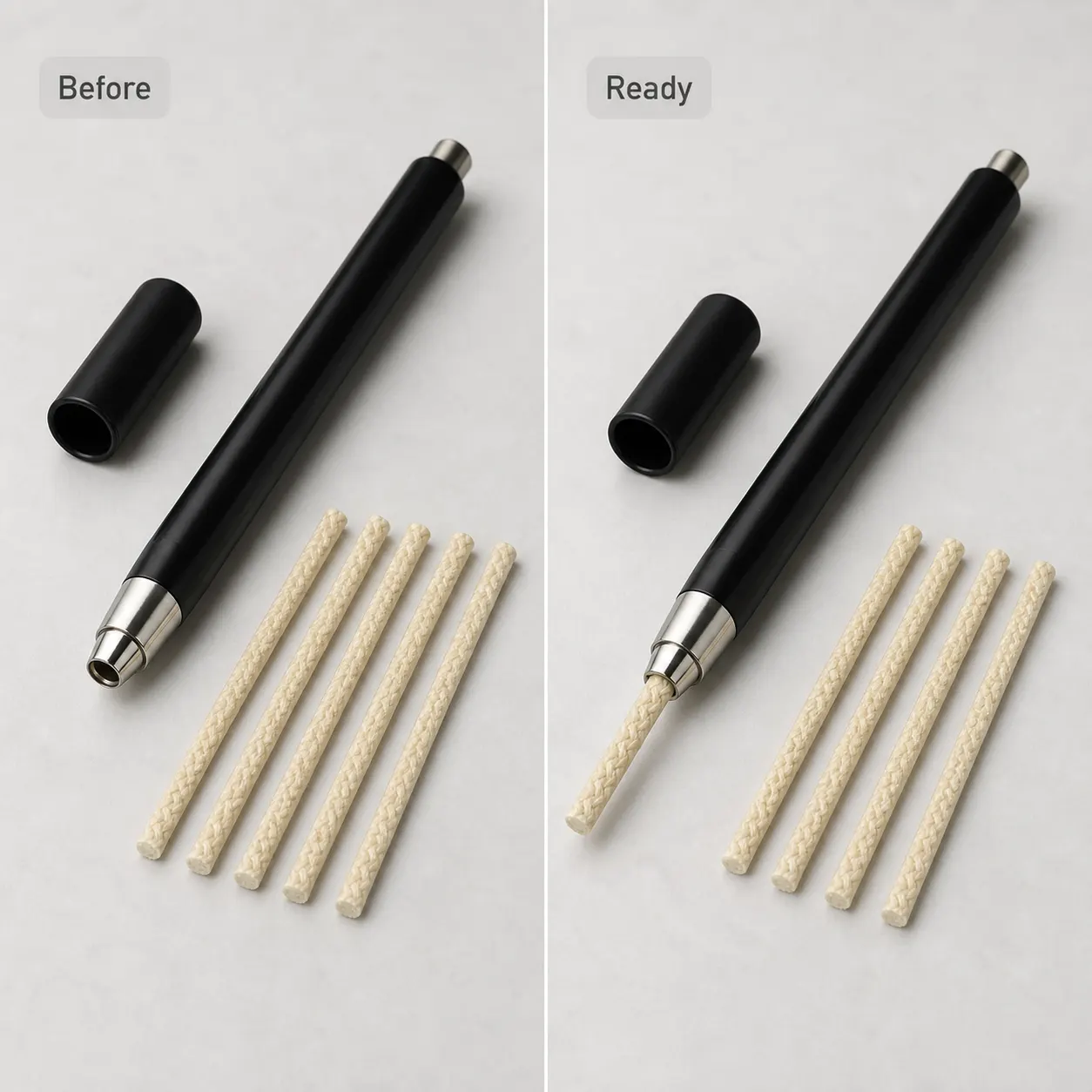
The current product page lists one smoke pen and six replacement wick cores. It also presents the pen-style format as compact for service bags, workshops and maintenance visits. Those are useful facts for a portable first-look task.
They do not establish that the kit includes a gauge, case, stand, extra consumables, protective equipment or instructions for every environment. The manufacturer does not specify those items, so ask before purchase if the work depends on them.
- Name the vent, joint, cabinet or draught path to inspect.
- Confirm that one pen and six replacement wick cores suit the operator.
- Check the site permission and alarm procedure.
- Write down the follow-up method before starting the observation.
Do not use smoke as an alarm test
A smoke pencil HVAC check is not a test of a domestic or commercial fire alarm. GOV.UK says household smoke alarms should be tested at least monthly, and fire-service guidance gives separate advice on alarm testing. Those duties do not turn a visual HVAC smoke source into an alarm-testing device.
Do not cover, disconnect or silence an alarm to avoid an inconvenient response. If smoke could reach a detector, affect occupants or enter a sensitive area, use the premises procedure and obtain permission from the responsible person before proceeding.
Use a second method when the decision is formal
HSE identifies smoke testing as one possible method used with other approaches to judge LEV performance. That supports using a visual plume as part of a controlled inspection, but it does not support calling every observation a measured leak result or a compliance certificate.
If the job requires airflow numbers, pressure values, an LEV examination, formal commissioning, certification or proof of a sealed space, follow the specified method with the required competence. The product page does not promise those outcomes or guarantee personal safety.
Related guides and product details
Use the smoke-pencil format for a named visual HVAC question, then hand measurement, alarm control and formal safety decisions to the required procedure. Read Smoke Pen Leak Tester for Ductwork: UK Service Checks for related guidance. Read How to Choose a Smoke Pen Leak Tester for HVAC Checks for related guidance. Review the documented specification on the HVAC Smoke Pen Kit product page before ordering.
Sources and safety context
- Supports the visual HVAC use, contents, compact format and unspecified technical details. HVAC Smoke Pen Kit product page.
- Supports smoke testing as one possible LEV performance method among other methods. HSE: Commission your local exhaust ventilation system.
- Supports monthly smoke-alarm testing guidance. GOV.UK: Fire safety in the home.
- Supports separate fire-service advice on testing smoke alarms. Dorset and Wiltshire Fire and Rescue Service: Smoke alarms.