
Short answer: To choose a smoke pen leak tester, first decide whether the job needs a visible indication of airflow or a measured result. The HVAC Smoke Pen Kit is listed for visual checks around vents, duct joints, cabinets and draught paths, with one pen and six replacement wick cores. That makes it a compact aid for locating where air movement deserves closer attention. It does not provide a stated airflow value, leakage rate, certification result or proof that a space is sealed. If the brief requires a documented measurement or formal sign-off, compare a suitable instrument and procedure instead of stretching a smoke pen beyond the product page.
Start with the result you actually need
A smoke pen is easiest to assess when the question is local and visual: where does air appear to move around a vent, joint, cabinet, grille or draught path? The product page positions this kit for that kind of observation. It does not turn an airflow pattern into a calibrated number.
If the brief asks for a leakage rate, airflow volume, tolerance, certification record or proof that a space is sealed, the product page does not support those outcomes. The manufacturer does not specify accuracy, range or a pass-or-fail method, so a buyer should choose the documented measurement route required by the job.
| Job question | Fit of this kit |
|---|---|
| Where does air appear to move? | Potentially suitable visual aid |
| What is the airflow or leakage rate? | Manufacturer does not specify a measurement function |
| Does the installation meet a formal requirement? | Use the required procedure and evidence, not this kit alone |
Match the inspection point to the listing
The listed application names HVAC vents, duct joints, cabinets and draught paths. Use those words as a buying boundary rather than treating a compact pen as suitable for every room, material or system. A named inspection point makes the observation easier to explain and record.
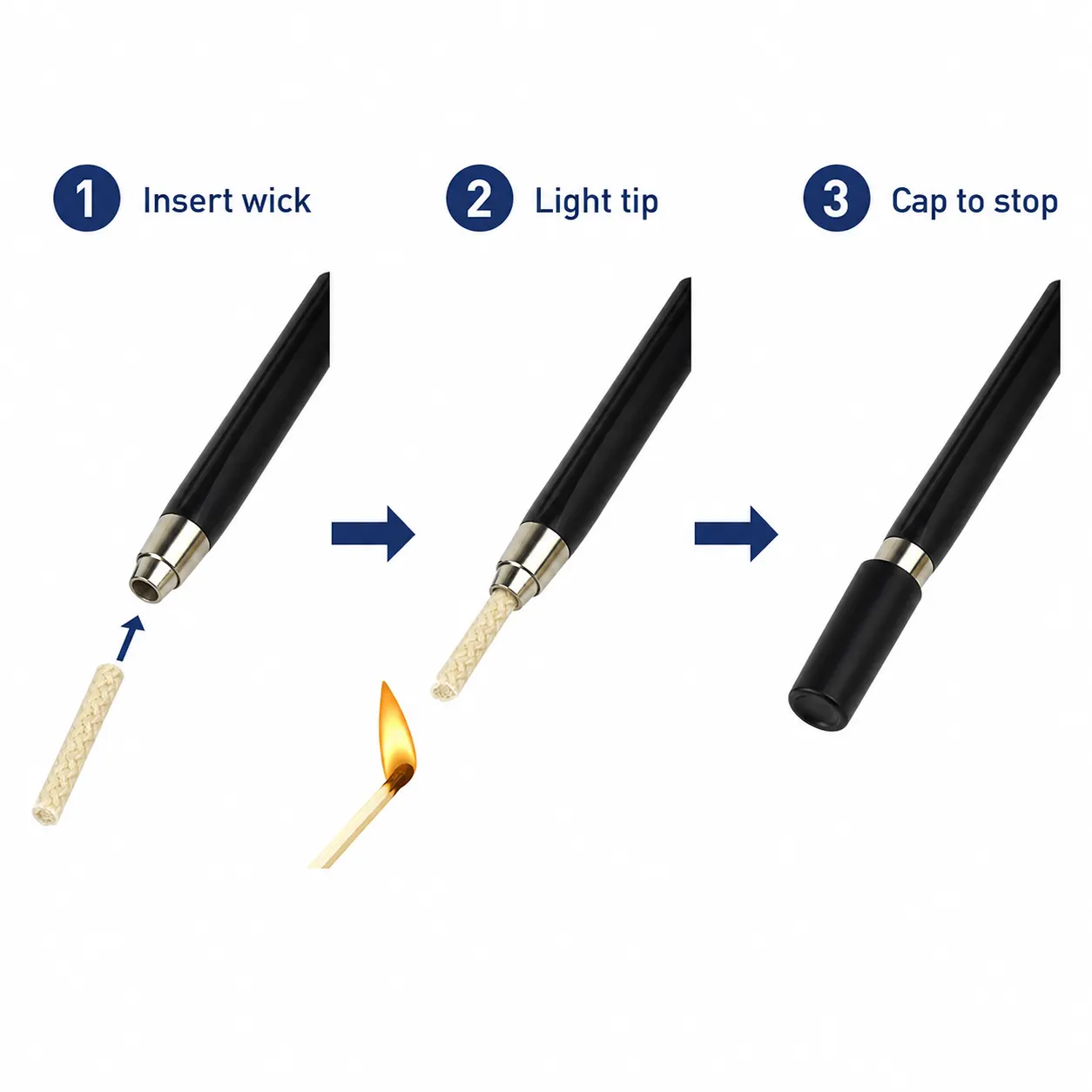
The product page lists one smoke pen and six replacement wick cores. That is enough to compare the kit with a single operator's service bag, but it does not document a multi-user set, extra probes, a case or a particular number of inspections. The manufacturer does not specify those additions.
- Write down the exact vent, joint, cabinet or draught path to inspect.
- State whether the result is visual direction or a measured value.
- Confirm that one pen and six replacement wick cores match the team setup.
Keep visual smoke separate from fire alarms
A smoke pen for an HVAC observation is not a domestic smoke alarm and is not a replacement for a fire detection system. GOV.UK fire guidance says smoke alarms should be tested at least monthly in the home, while the product page makes no claim that this kit detects fire or protects people.
Before any smoke is introduced on a premises, follow the site fire procedure and obtain the required permission. Do not cover, disable or interfere with an alarm to make a product test easier. GOV.UK guidance for rented housing places duties on landlords to provide prescribed alarms and check that they work at the start of a new tenancy.
Know when to stop comparing smoke pens
HSE describes visual examination, smoke testing, airflow measurements and other methods as possible ways to judge LEV performance. That does not mean every smoke pen is a complete LEV examination or that a visible plume proves compliance. Match the method to the system, procedure and competence required.
The sensible purchase decision is therefore narrow. Choose this listing when a compact visual cue is useful for deciding where to inspect next. Choose another documented method when the work needs numbers, certification, alarm testing, formal compliance evidence or a result that protects people through a wider fire-safety plan.
Related guides and product details
Buy the HVAC Smoke Pen Kit only when a visual airflow check is the actual next step; require a documented instrument or competent procedure for measurement and compliance work. Read HVAC Smoke Pen for Small Business: A Practical Fit Check for related guidance. Read HVAC Smoke Pen UK: What to Check Before Buying for related guidance. Review the documented specification on the HVAC Smoke Pen Kit product page before ordering.
Sources and safety context
- Supports the listed application, one-pen and six-wick contents, compact format and product limits. HVAC Smoke Pen Kit product page.
- Supports the distinction between smoke testing and other methods used to judge LEV performance. HSE: Commission your local exhaust ventilation system.
- Supports monthly smoke-alarm testing guidance. GOV.UK: Fire safety in the home.
- Supports the rented-sector alarm responsibilities described in the article. GOV.UK: Smoke and carbon monoxide alarm guidance.