
Short answer: An HVAC smoke pen for a small business can make a local airflow path easier to see around a vent, duct joint, cabinet or grille. The listed HVAC Smoke Pen Kit contains one smoke pen and six replacement wick cores, and its pen-style format is presented for service bags, workshops and maintenance visits. That is a practical fit when the team needs a visual cue before deciding what to inspect next. It is not a calibrated meter, fire alarm, certification device or guarantee that a room or duct is sealed. Before buying, compare the exact maintenance task, site rules and required evidence with the product boundary.
Decide whether the business needs a visual aid
For a small workshop, office or service business, the useful question is often where air appears to move at a local point. The product page names vents, duct joints, cabinets and draught paths, so the kit can be assessed as a compact visual aid for that first check.
The boundary matters more than the format. The product page does not state a numerical airflow function, leakage rate, certification or proof of a sealed space. The manufacturer does not specify those results, so do not sell the purchase internally as a compliance instrument or a safety guarantee.
- Name the exact point the team needs to inspect.
- Write down whether the expected result is visual direction or a measured value.
- Decide what competent follow-up will happen if movement is observed.
- Reject the kit if the business needs a formal result that is not documented.
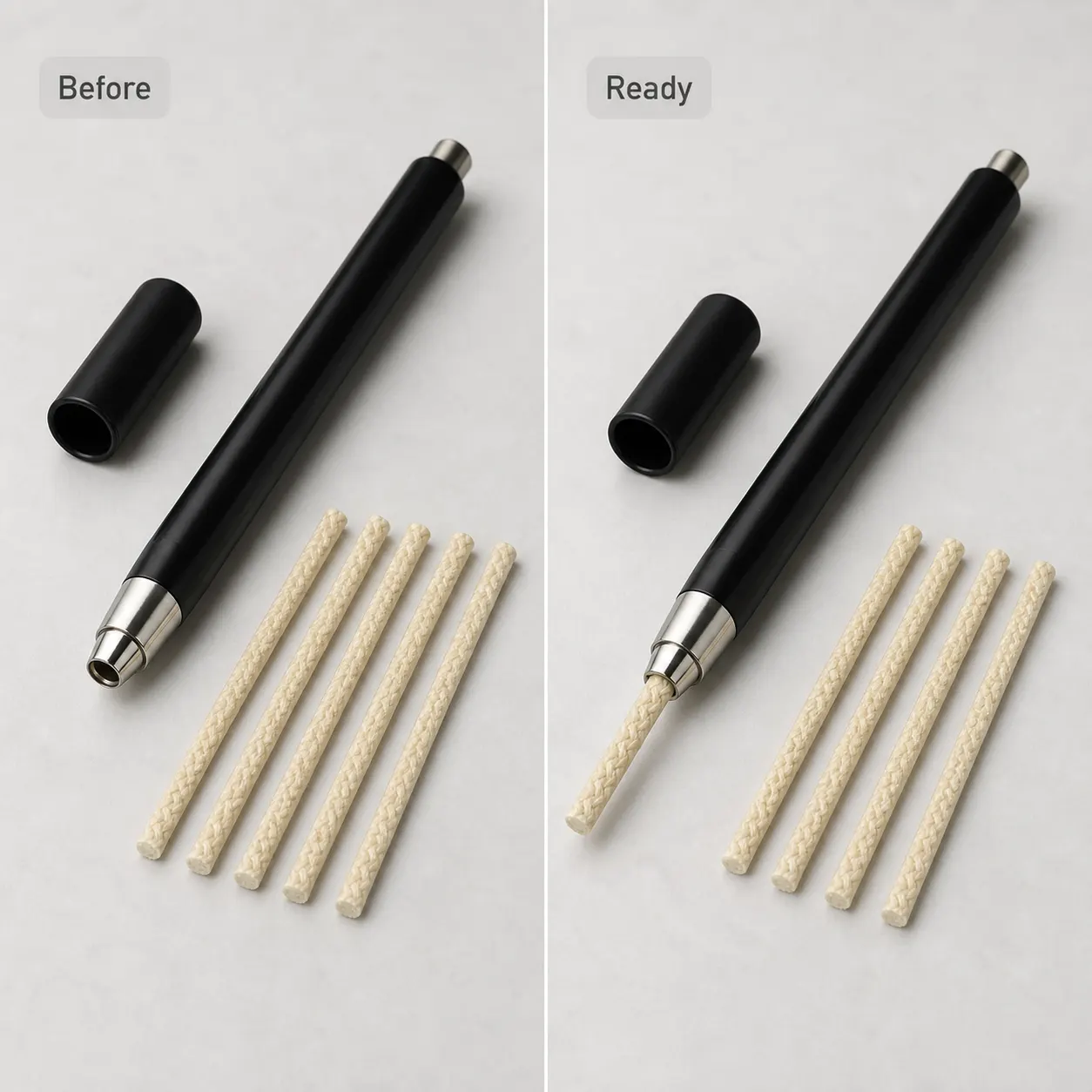
Check the contents against the team
The current listing says the kit contains one smoke pen and six replacement wick cores. That may be a sensible starting quantity for one operator carrying a service bag, but it does not establish a shared multi-user setup or a fixed number of site visits.
The product page does not specify a case, gauge, probe, stand, extra pen, wick life or storage system. A small business should price and plan around the listed contents only, then resolve any missing item with the seller or manufacturer before relying on it.
| Check | What the listing supports |
|---|---|
| Smoke source | One smoke pen |
| Replacement supply | Six replacement wick cores |
| Measurement or certification | Manufacturer does not specify it |
Protect the premises and its alarm controls
A business must keep its fire arrangements separate from a local HVAC observation. London Fire Brigade describes an appropriate fire detection system as a responsibility for premises managers, and GOV.UK guidance covers fire-safety responsibilities for England. A smoke pen does not replace either obligation.
Before using any smoke source, check the premises procedure, alarm zoning, occupants, sensitive equipment and permission route. Never disable, cover or isolate an alarm as an informal workaround. If the site cannot authorise the check, stop and use the approved method.
Make the purchase decision operational
The best small-business use case is a narrow one: a trained or authorised person needs a portable visual cue, records the location observed and passes the next decision to the person responsible for inspection, repair or formal testing. That workflow keeps the kit useful without making it carry unsupported claims.
HSE says LEV performance may be judged using more than one method, including visual and smoke testing alongside airflow or other measurements. If the business needs a thorough examination, documented commissioning or evidence for a client, the smoke pen should sit inside that procedure rather than stand in for it.
Related guides and product details
For a small UK business, the kit is a reasonable visual check only when the task, permission and follow-up method are already clear. Read HVAC Smoke Pen UK: What to Check Before Buying for related guidance. Read LEV Smoke Test Pen: Visual Checks and Safe Limits for related guidance. Review the documented specification on the HVAC Smoke Pen Kit product page before ordering.
Sources and safety context
- Supports the listed visual applications, contents and compact format. HVAC Smoke Pen Kit product page.
- Supports using smoke testing as one possible LEV performance method, not a universal substitute. HSE: Commission your local exhaust ventilation system.
- Supports the need to keep premises fire-safety responsibilities and system checks in scope. GOV.UK: Check your fire safety responsibilities.
- Supports the distinction between a smoke pen and an appropriate premises fire detection system. London Fire Brigade: Fire alarms.