
Short answer: For a UK buyer, an HVAC smoke pen is best understood as a visual airflow aid for a defined inspection point, not as a fire alarm or a compliance certificate. The Smokepen listing names HVAC vents, duct joints, cabinets and draught paths, and includes one smoke pen with six replacement wick cores. That can suit a maintenance visit where seeing movement helps decide where to look next. The page does not state accuracy, airflow range, alarm compatibility, human-safety performance or a sealed-space result. Check the task, premises procedure and evidence requirement before treating the compact format as a solution.
What the UK listing actually describes
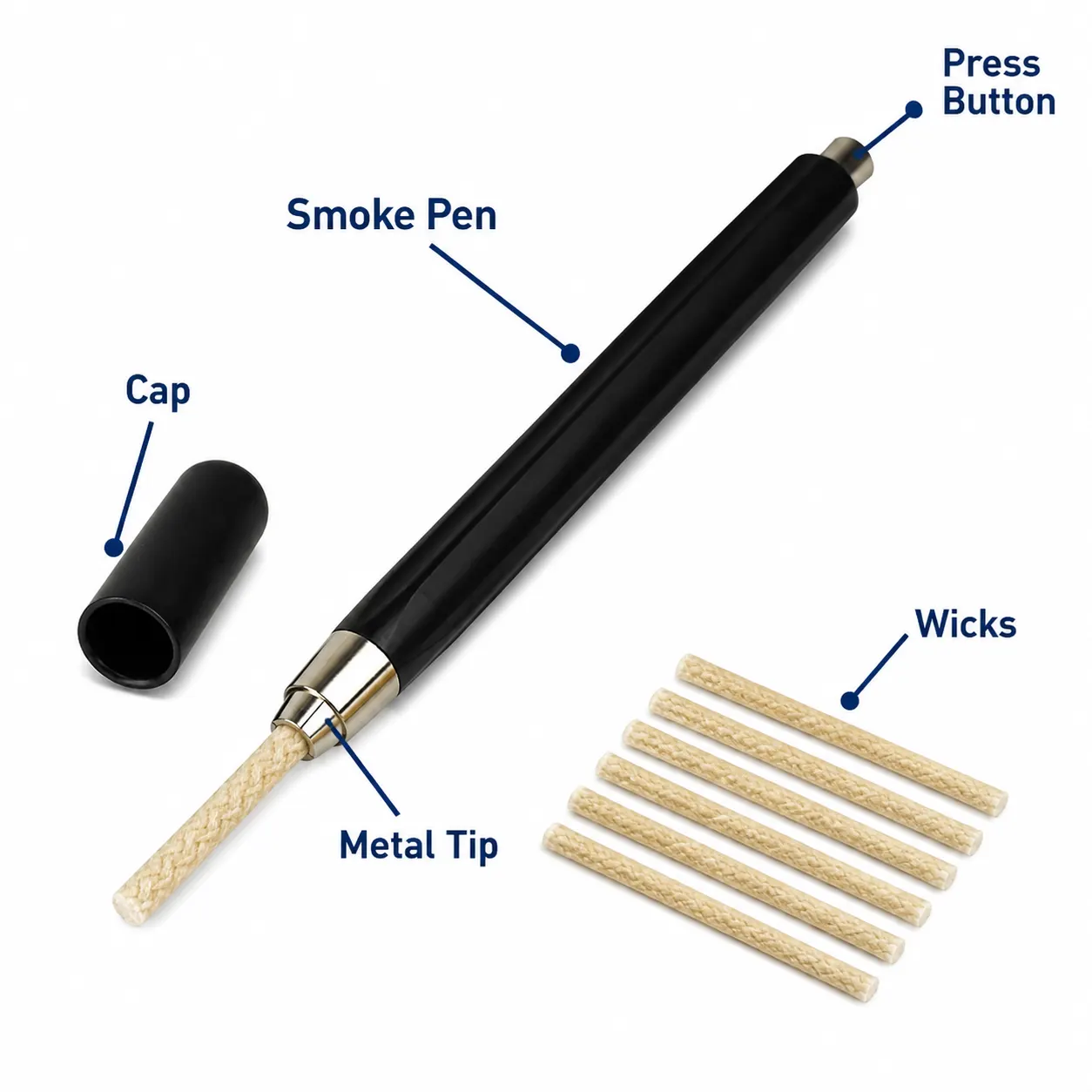
The product page describes the HVAC Smoke Pen Kit for visual airflow checks around HVAC vents, duct joints, cabinets and draught paths. It also lists one smoke pen and six replacement wick cores, with a pen-style format intended to stay compact for service bags, workshops and maintenance visits.
Those facts answer a buying question about format and basic use, but not every technical question. The manufacturer does not specify airflow accuracy, leakage-rate resolution, smoke output, material compatibility, alarm compatibility, service life or certification. Treat each unknown as a check before use, not as an implied feature.
| Published detail | Buying meaning |
|---|---|
| Visual airflow checks | Useful for seeing movement at a named point |
| One pen plus six wick cores | Check quantity against the actual team |
| Accuracy, certification and alarm compatibility | Manufacturer does not specify |
Use a permission-first UK workflow
A UK workplace or managed building may have its own fire, alarm, ventilation and permit procedures. Before introducing smoke, ask who controls the area, whether the check is authorised, whether occupants or sensitive equipment are affected and what record is required. If those questions are unanswered, do not improvise.
This is especially important near fire detection equipment. The product is not a fire alarm, does not test a fire alarm and must not be presented as protecting people. GOV.UK home guidance says smoke alarms should be tested at least monthly, while rented-sector guidance places separate duties on landlords for prescribed alarms.
- Identify the HVAC point and the person authorising the check.
- Confirm the site fire and alarm procedure before any smoke is produced.
- Observe only the question the check is meant to answer.
- Record the location and hand the next decision to the responsible person.
Keep smoke observation and compliance apart
A visible plume can help explain direction or disturbance, but it is not automatically a measured leak result. HSE describes visual, smoke-test, airflow-measurement and other methods in LEV commissioning guidance; the correct combination depends on the system and the procedure.
Do not use the kit alone to claim that ductwork is airtight, an LEV system complies, a room is safe or an installation has passed. If the client, insurer, auditor or regulator needs evidence, follow the specified method with the required competence and records.
Check whether the compact kit fits
The kit is easiest to justify when one operator needs a portable visual cue around a named vent, joint, cabinet or draught path. It is harder to justify when the work needs several operators, a controlled smoke study, a numerical result, a formal fire-alarm test or a documented standard that the product page does not name.
Before ordering, compare the listed contents with the service bag, confirm the permission route and write down the follow-up method. If the plan depends on an unlisted accessory, alarm response, smoke exposure limit or guaranteed detection result, pause because the manufacturer does not specify that support.
Related guides and product details
For UK buying, keep the smoke pen in the visual-inspection lane and keep fire alarms, compliance evidence and formal measurements under their own procedures. Read LEV Smoke Test Pen: Visual Checks and Safe Limits for related guidance. Read Smoke Pencil HVAC: Visual Airflow Checks Without Overclaiming for related guidance. Review the documented specification on the HVAC Smoke Pen Kit product page before ordering.
Sources and safety context
- Supports the product's listed visual use, contents and compact format. HVAC Smoke Pen Kit product page.
- Supports the distinction between smoke testing and other LEV performance methods. HSE: Commission your local exhaust ventilation system.
- Supports the monthly smoke-alarm testing guidance. GOV.UK: Fire safety in the home.
- Supports the separate rented-sector alarm duties. GOV.UK: Smoke and carbon monoxide alarm guidance.