
Use a smoke pen when airflow needs to be seen before it is measured
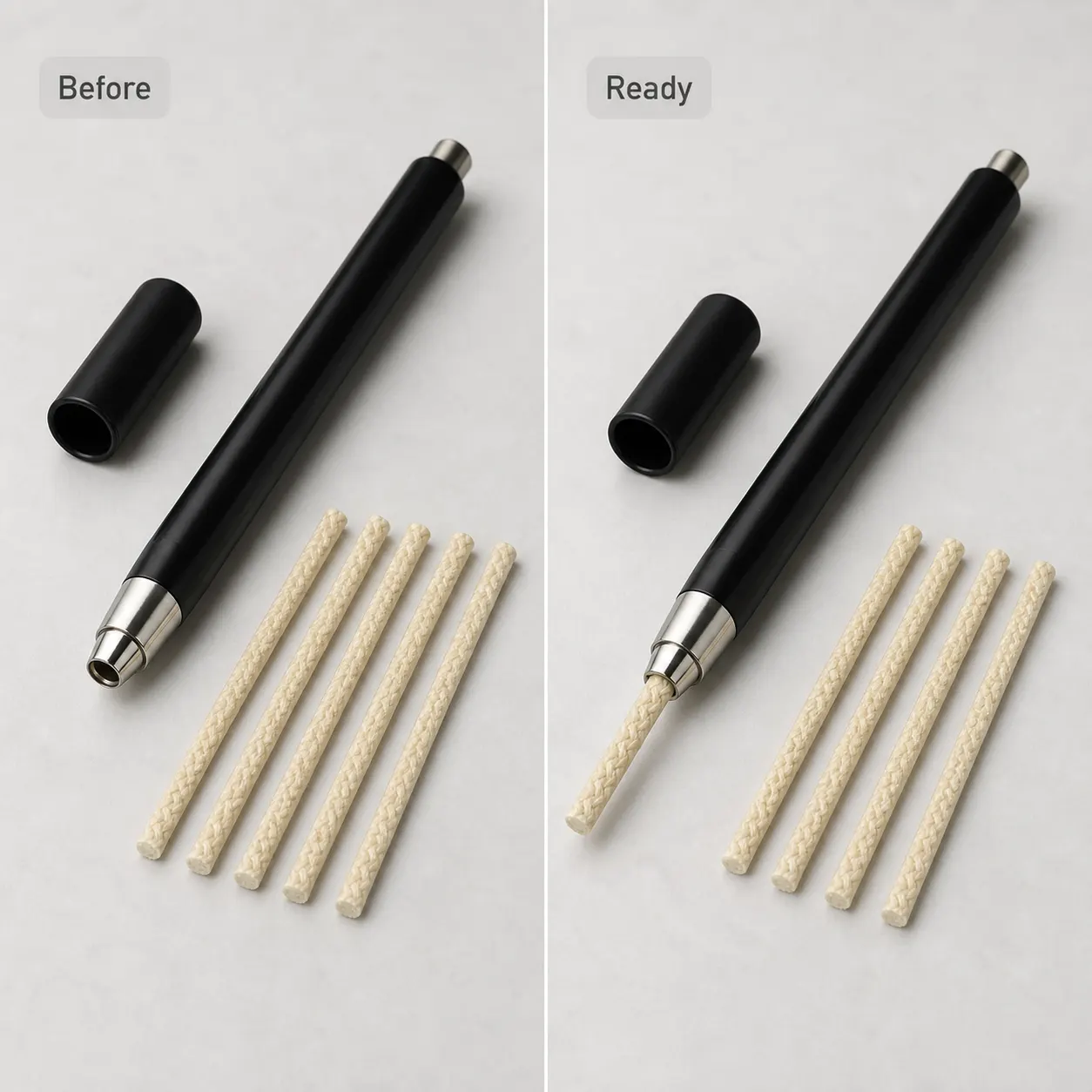
A smoke pen leak tester for ductwork is best treated as a visual inspection aid, not as a calibrated test instrument. On a service visit in a Birmingham plant room, a technician can use a small smoke source to make likely air movement easier to see around joints, grilles, access panels, hoods, door gaps or extraction arms. That visible cue can help decide where to inspect next, where to talk the client through a likely leak path, and where a formal measurement or repair may be needed.
The important buying decision is not whether a smoke pen can replace proper commissioning or compliance work. It cannot do that unless your procedure specifically allows it and supporting evidence exists. The practical question is whether a compact consumable kit belongs in the callout bag for first-pass fault finding. If the job is to show direction of flow, locate a suspect inspection point, or support a troubleshooting conversation, the documented positioning of the HVAC Smoke Pen Kit fits that narrow purpose.
Match the tool to a UK ductwork inspection setting
In a real building-services job, the setting matters. A smoke pen used beside a warehouse extraction arm in Leeds is doing a different job from one used near a domestic loft hatch or a laboratory fume hood. For ductwork, the strongest fit is a controlled visual check around accessible areas where air movement is uncertain: duct joints, dampers, grilles, door undercuts, penetrations, extraction hoods and recently repaired sections.
The buyer most likely to benefit is a UK HVAC, LEV or maintenance technician who already understands that smoke observation sits alongside professional judgement. It can make invisible movement visible enough to explain a suspected leak or pressure direction, but it does not document leakage rate, airflow volume or system compliance. That distinction protects both the technician and the client: the smoke pen helps frame the next decision, while formal instruments and procedures still carry the measurement work.
Check the documented facts before relying on the listing
The frozen product facts for this item are deliberately conservative. The product is identified as an HVAC Smoke Pen Kit by SMOKE PEN, locked to the selected smoke pen and wick kit configuration, and described as a consumable inspection aid for leak tracing workflows. It is positioned as a compact kit for maintenance product listings, with copy prepared from an archived listed record. Those facts support a practical airflow visualisation use case, but they do not support stronger technical claims.
There are also gaps a careful buyer should notice. No public specifications, kit contents, material list, usage steps or suitability list are documented in the supplied facts. That does not make the item useless, but it means you should avoid assuming smoke output level, residue behaviour, certification status, alarm compatibility, cleanroom suitability or measurement accuracy. If your workplace procedure depends on any of those points, treat them as checks to resolve before using the product in that setting.
Avoid mismatches in labs, alarms and sensitive spaces
The main mismatch is treating a visual aid as permission to use smoke anywhere. In a hospital plant room, school workshop, food-production area, cleanroom, laboratory or occupied office, the decision is not only about whether the pen can show airflow. You also need to consider local procedures, smoke alarms, nearby occupants, sensitive equipment and whether any smoke source is allowed at that time. The product facts do not provide a blanket safety or compliance claim, so the site rules must lead.
The same caution applies to controlled environments. The audience research shows that lab, fume-hood and cleanroom technicians may search for smoke pens to observe airflow paths, but the supplied product record does not verify GMP, ISO, medical, cleanroom, non-toxic, residue-free or validation claims. For those settings, a smoke pen may be useful only if your internal method permits it as a visual aid. If a formal smoke study, validation package or documented compliance evidence is required, this listing alone is not enough.
Use a practical ductwork check sequence on the bench and on site
A sensible sequence starts before the smoke appears. At the packing bench or service van, confirm that the kit you have is the selected smoke pen and wick kit configuration, because the listing is locked to that configuration. On site, choose a small area where visual movement will answer a specific question: is air being drawn into a joint, pushed out of a gap, pulled towards an extraction hood, or disturbed around a grille? Keep the question narrow so the result is useful.
The working checklist is simple: identify the exact inspection point; confirm the area is appropriate for a smoke source under local rules; keep the smoke observation close to the suspected leak or airflow path; watch direction and disturbance rather than trying to infer a measured leakage rate; record the location if the finding affects further work; then decide whether the next step is sealing, balancing, client explanation or formal measurement. This keeps the smoke pen in its proper role as a cue for action.
Compare a smoke pen with other airflow options by task size
For small ductwork checks, a compact smoke pen is attractive because it can sit with ordinary maintenance tools and be brought out during a callout. It suits point observations: a grille edge, an access hatch, a short joint, an extraction-arm capture point or a door-gap pressure cue. That is different from using a larger smoke generator, which may be more appropriate when the task involves a room-scale pattern, a bigger volume, or a planned demonstration with wider visibility requirements.
Compared with informal household substitutes such as incense, candles or vapour, the smoke pen’s value is that it is being sold and named for HVAC smoke pen work rather than lifestyle or novelty use. Even so, the decision should stay grounded. The documented facts support consumable leak tracing workflows and compact kit positioning, not a promise that it will outperform every alternative in weak, intermittent or complex airflow. Choose it when the job is local observation, not when the job is full system quantification.
Decide who should not buy this for ductwork work
Do not buy this expecting a certified duct leakage tester, a calibrated airflow meter or a substitute for professional commissioning records. The product facts do not state measurement accuracy, standards compliance, output specification, or acceptance for any regulated test method. If your client is asking for documented leakage rates, balancing values, cleanroom validation or formal LEV examination evidence, you need the appropriate procedure and instruments rather than relying on a smoke pen alone.
It may also be a poor fit if your main concern is an environment where smoke cannot be introduced, or where alarms and occupants make even a small visual smoke source impractical. For domestic users, it can help trace likely draught paths around doors, windows, loft hatches or fireplaces, but older UK homes still need appropriate ventilation. Finding a draught does not automatically mean every gap should be sealed without thought.
Make the next step a grounded purchase decision
If your work is mostly UK HVAC maintenance, ductwork inspection, extraction-arm checks or post-repair walkthroughs, the HVAC Smoke Pen Kit is worth considering as a compact visual aid. The commercial facts are straightforward: the listed price is £84.98, VAT is included, Free UK Delivery is stated, processing is 1-3 business days, delivery is 2-4 business days after dispatch, and the stated return window is 30 days. Those details help with a practical purchase decision without overstating the technical side.
The grounded next step is to compare the documented product role with the inspection tasks you actually face. If you need a small consumable smoke source to support leak tracing conversations and first-pass airflow observation, the fit is clear enough. If you need proof, certification, quantified leakage data or verified suitability for a sensitive environment, gather that evidence before buying or choose a method built for that requirement. That distinction is what makes the purchase professional rather than speculative.