
Use an LEV smoke test pen to decide where to look next
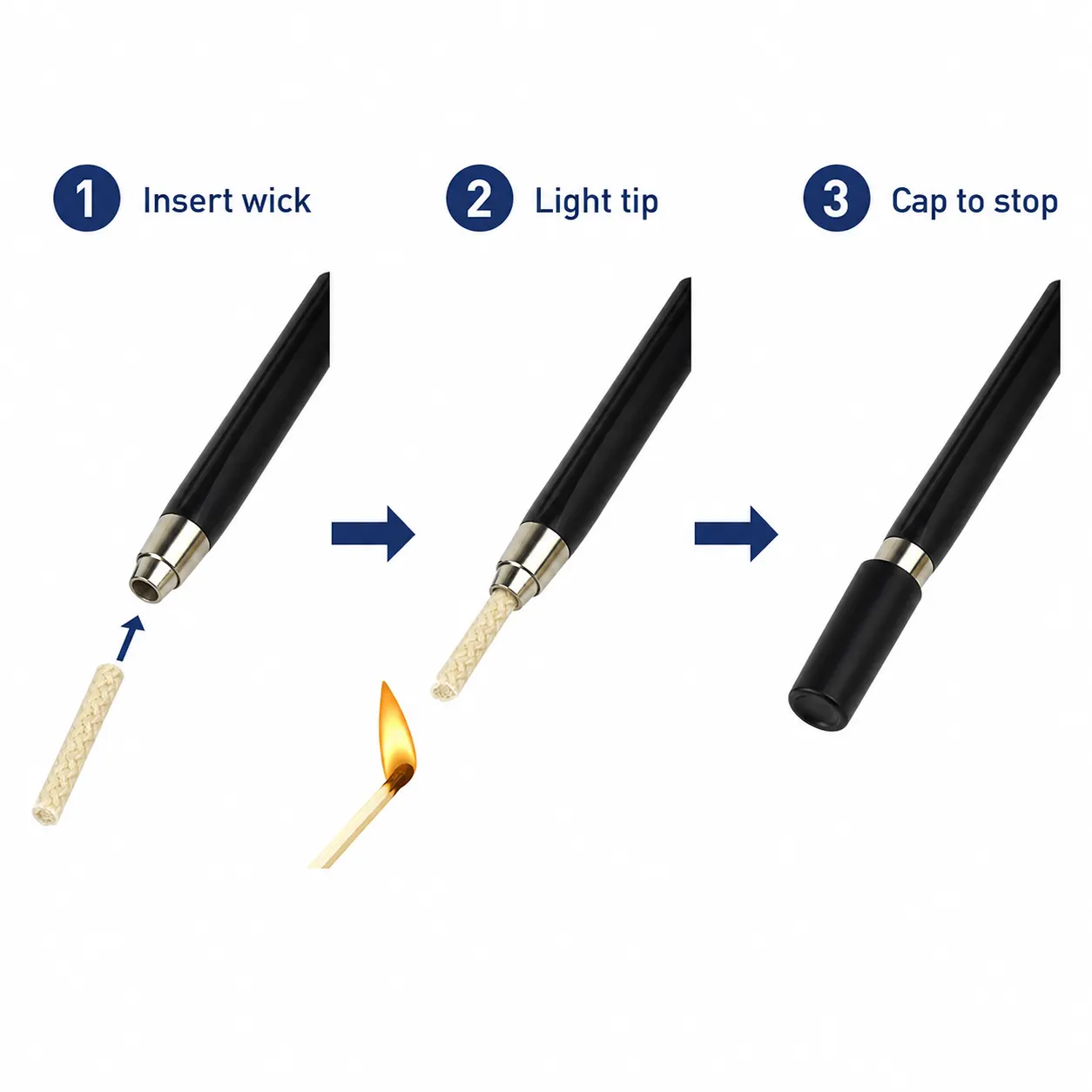
An LEV smoke test pen is best treated as a compact visual inspection aid, not as a certified test instrument. If you are standing beside an extraction arm, hood, grille, door gap or duct joint and need to see which way air is moving, a smoke pen can give a visible cue that helps you decide the next inspection point. It can support a conversation with a site contact, but it should not be used as a shortcut for formal LEV examination, calibrated airflow measurement or documented compliance work.
For a UK buyer, the useful question is not whether the pen can replace professional testing. It cannot be assumed to do that from the documented facts. The better question is whether a small consumable smoke source belongs in the callout bag for first-pass observation. If the job is to make airflow behaviour easier to see during maintenance, post-repair checks or troubleshooting, the HVAC Smoke Pen Kit fits that general direction. If the job requires verified output data, classification, certification or laboratory validation, the product facts supplied here do not support those claims.
Where the pen fits on a UK workshop or plant-room visit
Picture a technician in a joinery workshop, college workshop, fabrication bay or small factory plant room. Someone has reported weak capture at a hood, a draught near a door, or uncertain flow around a local exhaust point. Touch and sound may suggest something is happening, but neither gives a clear visual explanation to the person responsible for the area. In that setting, visible smoke can help show whether air is being drawn towards an opening, drifting away, or behaving unpredictably near the point being checked.
This is the kind of setting where a compact kit makes sense. It is not being framed as a full smoke generator for large room studies, and the provided product facts do not list detailed smoke output, room-volume suitability or formal test standards. The documented position is narrower: a smoke pen and wick kit configuration, prepared as a consumable inspection aid for leak tracing workflows. That wording matters because LEV work often has a line between useful observation and formal evidence. The pen sits on the observation side of that line.
Check the documented facts before relying on the listing
The frozen product record gives a restrained set of facts. The product is titled HVAC Smoke Pen Kit, under the SMOKE PEN brand. It is locked to the selected smoke pen and wick kit configuration, designed as a consumable inspection aid for leak tracing workflows, and positioned as a compact maintenance kit. The listing direction is deliberately conservative and avoids unsupported safety or performance statements. That is useful for professional buyers because overconfident claims are often a warning sign in technical maintenance tools.
What is not documented is just as important. The supplied facts do not list dimensions, exact kit contents, smoke duration, surface compatibility, alarm behaviour, residue detail, cleanroom suitability, test accuracy or formal approvals. That does not automatically make the product unsuitable; it means the buyer should not pretend those details are proven. If your site paperwork needs specific evidence, ask for it before using the tool in that process. If your task is a visual airflow cue during an inspection conversation, the available facts are enough to understand the product’s intended role.
Match the pen to the LEV task, not to a promise
For LEV work, a smoke pen can be useful when the task is visual: showing whether air is being pulled into an extraction opening, checking flow direction around a hood, looking for likely leakage paths around ductwork, or helping a client understand why a further check is needed. These are observation jobs. They help shape the next action, such as inspecting a joint, adjusting a position, escalating to formal measurement or arranging repair work. The pen should be described in that modest, practical language.
Avoid turning the purchase into a promise the product facts do not make. There is no verified claim here that the pen proves compliance, measures capture velocity, confirms exposure control, validates a cleanroom or guarantees fault detection. A good maintenance decision respects those limits. In a busy UK service setting, the value is often in narrowing uncertainty quickly: where is the air going, where might the leak be, and what should be checked next? That is a different job from issuing a formal pass or fail.
Spot the mismatches before you buy
Do not buy this as an LEV smoke test pen if your requirement is a certified instrument with traceable measurement data. The supplied product facts do not support that role. Do not buy it as a substitute for a formal LEV examination, a calibrated airflow meter, a room-scale smoke generator or a controlled-environment validation method. If the workplace procedure needs documented compatibility, classification, output details or approval evidence, those facts are not present in the frozen record and should not be assumed.
There are also practical mismatches. If the area is sensitive to smoke, has procedures around airborne materials, includes alarms that may react to smoke, or involves people who could be affected by smoke use, the decision belongs with the site’s own procedure. The listing does not provide a product-specific safety guarantee. For domestic draught tracing, the same restraint applies: it may help show a possible air path around a window, loft hatch or fireplace, but it should not be sold as a guaranteed energy-saving device or a replacement for a professional survey.
A bench-side checklist for a service call
Use this checklist at a packing bench, workshop extraction point or plant-room grille before deciding whether the HVAC Smoke Pen Kit is the right purchase. First, name the task in plain terms: visual airflow cue, leak tracing workflow, draught direction check or client demonstration. Second, check whether the job needs formal measured evidence. If it does, this product record does not support using the pen as the evidence source. Third, confirm that a smoke source is acceptable in the environment under the site’s own rules.
Fourth, compare the documented product facts against the job: smoke pen and wick kit configuration, compact maintenance-kit positioning, consumable inspection-aid role, and conservative copy with no unsupported performance promise. Fifth, identify what is unknown before use: exact contents beyond the stated kit direction, output duration, residue behaviour, alarm response, certification status and suitability for controlled environments. Sixth, decide the next action after the visual cue. That might be closer inspection, sealing work, balancing, formal measurement or telling the client the observation is only an initial guide.
How to explain the tool to a client on site
The plain-English explanation is simple: the pen helps make air movement visible for a short observation. That phrasing is more credible than saying it tests, certifies or proves the LEV system. If a client in a Birmingham workshop or Manchester plant room asks what the smoke is showing, keep the explanation tied to what can be seen. The visible movement may suggest direction, disturbance or a likely next inspection point, but it does not become a calibrated reading just because it is persuasive.
This matters commercially as well as technically. Buyers trust restrained wording because it does not overstep the evidence. If the page, invoice discussion or technician’s note describes the pen as a visual aid for HVAC and LEV-related airflow observation, the expectation is clear. The client can understand why it is being used, and the technician can still recommend proper measurement or repair where needed. That is a stronger buying case than a product page full of unsupported claims.
The grounded next step for a UK buyer
If your search for an LEV smoke test pen is really about adding a compact visual cue to a maintenance bag, compare the HVAC Smoke Pen Kit against that narrow need. The listed price is £84.98 with VAT included, and the commerce information states Free UK Delivery, 1-3 business days processing, 2-4 business days delivery after dispatch, and a 30-day return window. Those details help with a practical purchase decision, but they do not change the technical limits of the product facts.
The sensible next step is to decide which job you are buying for. For workshop extraction checks, plant-room walkthroughs, duct leak tracing conversations or draught direction observations, a smoke pen can be a useful support tool when used within site rules. For compliance evidence, cleanroom validation, alarm-sensitive spaces or any setting needing documented product-specific assurances, pause and gather the missing facts first. Buy it for the visible airflow job it is documented to support, not for claims the record does not make.